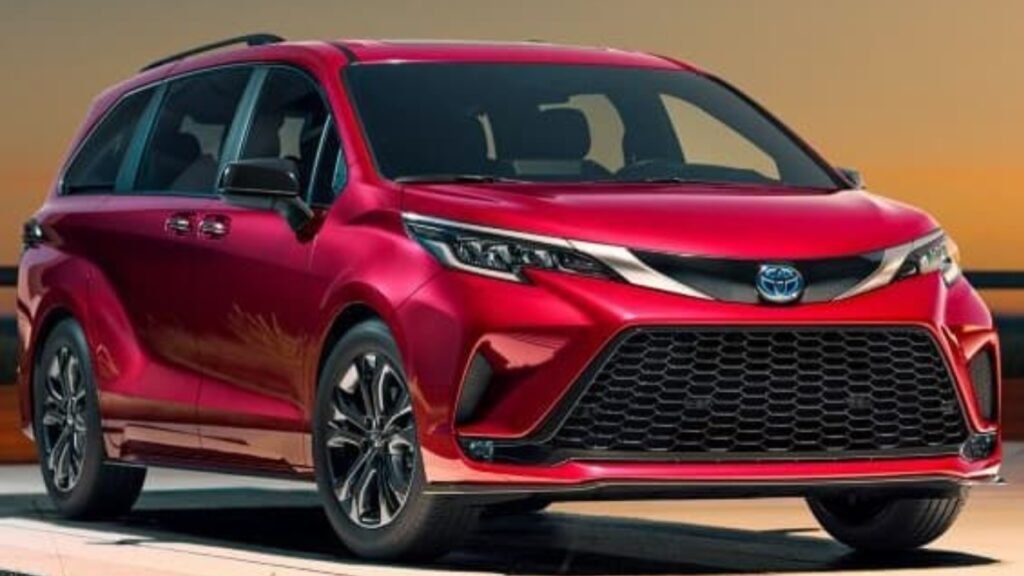
One of the headline changes is that the 2025 Sienna is offered only with its hybrid powertrain—no conventional gasoline‑only version. That means when you buy one, you’re guaranteed the efficiency benefits of hybrid technology. Under the hood: a 2.5 litre four‑cylinder combined with electric motors, producing about 245 horsepower.
This means you get the power you need for family transport, but also the peace of mind from lower fuel consumption.
Updated comfort and tech
Toyota has also refreshed the Sienna’s cabin and features. The infotainment system gets upgrades (higher‑resolution screens, wireless smartphone connectivity), and comfort for passengers gets extra attention. Some of the top trims now include more luxury touches and convenience features (think built‑in vacuum, refrigerator box, etc.).
This helps the vehicle feel less like a plain practical van, and more like a premium people mover.
Design & practicality tweaks
While the overall shape remains recognizable as a minivan, Toyota has refined the styling: cleaner lines, more premium materials inside, and improved ergonomics for families. Sliding doors, multiple seating configurations, smart storage—all catered to real‑life use.
Why this matters
In a time when many families opt for large SUVs instead of minivans, the Sienna stands out by offering the space and practicality of a minivan, with improved efficiency and refinement. In short: you don’t have to compromise.
2. Toyota Sienna 2025 Specifications at a Glance
Here are the key specs of the 2025 model to give you a grounded understanding of what you’re getting.
-
Powertrain: 2.5 L four‑cylinder hybrid with electric motors, producing about 245 hp combined.
-
Drivetrain options: Front‑wheel drive (FWD) standard; all‑wheel drive (AWD) available (in some trims) via additional electric motor.
-
Transmission: Continuously Variable Transmission (CVT) adapted for the hybrid system.
-
Seating capacity: Up to 7 or 8 passengers depending on configuration (bench vs captain’s chairs).
-
Fuel economy / Mileage: For FWD models, around 36 mpg combined (US estimate). For AWD slightly lower (e.g., ~35 mpg combined) in U.S. specs.
-
Towing capacity: Up to approximately 3,500 lbs when properly equipped.
-
Dimensions: Length ~203.7 in, Width ~78.5 in, Height ~68.5 in (varies slightly by trim).
-
Cargo capacity: Behind the third row around ~33‑34 cubic feet; more when second row is folded.
-
Key features: Sliding side doors, power liftgate (higher trims), multiple USB ports, advanced driver‑assistance systems, available luxury amenities.
These numbers reflect that the Sienna is not just about maximum space, but about doing the job well: offering efficiency, comfort and family‑friendly features.
3. Toyota Sienna 2025 Pricing & Trim Levels (toyota sienna price / toyota sienna trim levels)
Understanding pricing and trim levels is key to deciding which version to go for.
Starting price and MSRP
For 2025 in the U.S. market, the base model (typically the LE trim) starts around US $39,400‑$40,000 (FWD). Top trims (like the Platinum with AWD and full features) may approach or exceed US $57,000.
This gives a wide range, so you can roughly decide your budget and then pick features accordingly.
Trim levels overview
Here’s a breakdown of the main trim levels for 2025, and what they typically include:
-
LE: Entry level. Hybrid powertrains, basic comfort and safety, seating for many.
-
XLE: Mid‑tier. Adds more comfort features: power sliding doors, upgraded interior material, maybe more convenience tech.
-
XSE: Sport‑oriented trim (but still family‑friendly). Adds sport styling, larger wheels, more premium finishes.
-
Woodland Edition: Tailored for more rugged use (AWD only), adds off‑road or outdoor‑ready touches (roof rails, towing package, special styling).
-
Limited: Premium features, high‑end interior materials, top‑tier comfort and tech.
-
Platinum: Top of the line. All bells and whistles: premium upholstery, built‑in vacuum, refrigerator box, the largest screen, maybe digital gauge cluster, etc.
Value‑for‑money considerations
-
If you only need basic functionality and seating 7‑8 without all the luxury features, the LE or XLE give strong value.
-
If you’re doing long road trips, have multiple kids, want premium comfort, then moving up to Limited or Platinum might be worth the extra cost.
-
Beware of extra options/packages: many trims will have optional features (upgraded multimedia, premium audio, AWD) that push up the final price.
-
Also, if you’re in the “toyota sienna for sale” market (used or new inventory), you’ll want to compare what features each actual vehicle has, not just the trim badge.
4. Driving Experience & Review Impressions (toyota sienna review)
What does it feel like behind the wheel of the 2025 Sienna? What are reviewers and owners saying?
On the road
-
Reviewers note that the hybrid powertrain provides adequate acceleration for everyday driving (town, highway) and delivers smooth performance, especially from electric assist.
-
Driving dynamics: for a 7/8‑seater minivan, the Sienna handles impressively well—turning radius and ride comfort have improved.
-
Noise, vibration, and harshness (NVH) levels are better on higher trims: better insulation, quieter cabin, smoother ride.
Highlights from reviews
-
The fuel economy (mileage) stands out: reaching mid‑30s mpg combined in real‑world usage for such a big vehicle is a win.
-
The interior versatility and comfort get praise: easy sliding doors, generous second and third‑row space, plenty of USB ports, and family‑friendly touches make it a well‑rounded people hauler.
-
Premium touches: reviewers often comment that the higher trims feel far more upscale than expected in a minivan, thanks to features like heated/ventilated seats, digital displays, upgraded upholstery, built‑in vacuum or fridge box.
Points of caution
-
While acceleration is fine, it’s not super sporty: the system is tuned more for smoothness and efficiency than outright speed. If you’re used to high‑performance SUVs you’ll feel the difference.
-
Cargo space behind the third row is decent, but compared to some large SUVs or vans it may not be class‑leading—so if you regularly carry lots of gear, check the actual usable space.
-
Some owners comment on wait‑times and availability—demand is high, so inventory may be limited in certain markets.
Overall verdict
If I were summarising: The 2025 Toyota Sienna is one of the strongest choices in the minivan (or 3‑row family vehicle) category. It ticks nearly every major box: space, comfort, efficiency, tech, and family orientation. The premium feel in higher trims elevates it above many “just practical” alternatives.
5. Interior, Comfort & Practicality
Since the Sienna is very much about transporting people and stuff, let’s explore how well it delivers.
Seating & space
-
The vehicle offers up to 7 or 8 seats: depending on whether you choose second‑row captain’s chairs (makes 7) or a three‑seat second row bench (makes 8).
-
Third‑row seating: For many adults, the third row is usable—not just for kids. In many reviews, head‑room and leg‑room are acceptable.
-
Second row: good access thanks to sliding doors, and lots of flexibility (slides, reclines, etc.).
-
Seat materials: Lower trims use cloth, mid trims use synthetic leather (SofTex), higher trims genuine leather (or premium leather‑look material) plus heated/ventilated seats.
Cargo & storage
-
With all seats up, cargo behind third row is decent (~33 cubic feet). Fold the third row, you get significantly more space.
-
Storage bins, cubbies, USB ports, and family‑friendly touches abound. Sliding doors, power liftgate (in many trims) make loading/unloading easier.
-
Some top trims add unusual extras: built‑in vacuum cleaner (very handy for families with kids/pets), refrigerator box in console area (for drinks/snacks) which adds novelty & utility.
Tech & connectivity
-
Standard infotainment: wireless Apple CarPlay & Android Auto, multiple USB ports.
-
Upper trims: larger screens (12.3‑inch available), digital instrument cluster, premium audio systems (JBL in some trims).
-
Safety tech: Advanced driver‑assistance systems are standard: automatic emergency braking, pedestrian detection, lane‑keeping assist, adaptive cruise control, blind‑spot monitoring and more.
Ride quality & comfort
-
Thanks to the hybrid setup and refined chassis, ride quality is very good for a vehicle of this size.
-
Noise levels improved in recent version: less road noise, better insulation.
-
Long‑distance comfort: reviewers often highlight how family‑road‑trip friendly the cabin is—plenty of room, fewer fatigue issues, thoughtful design.
6. Efficiency & Running Costs (toyota sienna mileage)
A key reason to consider the Sienna: the hybrid powertrain leads to strong efficiency for a large people‑carrier.
Fuel economy / mileage
-
For the FWD version, estimates show around 36 mpg combined (city & highway average) in U.S. testing.
-
With AWD the figure drops slightly (for example around 35 mpg combined) because of the added motor/weight.
-
Real‑world owner reports often match or come close to those numbers, especially in mixed driving (town + highway).
-
For families doing large miles, over time the savings on fuel vs conventional large V6 SUVs could add up.
Running & maintenance costs
-
Because it’s a hybrid, you’ll likely benefit from fewer stops at the pump and potentially lower fuel costs over time.
-
Toyota’s reliability reputation also helps reduce worries about major issues.
-
Depreciation: as with any vehicle, resale value is influenced by brand, condition, demand. The Sienna used market may stay strong given limited supply in recent years.
Tips to maximise efficiency
-
Drive smoothly: gentle acceleration helps the hybrid system work best.
-
Keep tyres properly inflated and maintain good service habits: hybrids benefit from good mechanical health.
-
Consider whether you need AWD: if you live in a mild‑climate area with little need for extreme traction, the FWD version may maximise fuel economy.
-
If buying used (see next section) check battery/hybrid system health.
7. Buying Used & Considerations (toyota sienna used)
If you’re considering a used 2025 Sienna (or earlier model), here are important tips.
Benefits of buying used
-
You may access a higher trim level or added features at a lower price point than new.
-
The hybrid system has proven reliability (in Toyota’s case) so buying used doesn’t necessarily carry huge risk if properly maintained.
-
You get many of the benefits of the model (space, efficiency, comfort) without paying full new‑car premium.
What to check
-
Service history: ensure regular maintenance was performed (oil changes, hybrid system checks, tyres, brakes).
-
Battery/hybrid health: hybrids have additional components (battery packs, electric motors) — while Toyota hybrids are well regarded, you’ll want evidence that they’ve been well looked after.
-
Vehicle condition: check sliding doors, power features, upholstery (with children/pets these can wear quickly).
-
Usage & mileage: high‑mileage large vehicles may carry more wear and tear.
-
Trim/features: Confirm that the used vehicle has the exact features you want (since within the same model year, trims vary significantly).
-
Availability & price: Because new 2025 Siennas may be in limited supply (high demand), used versions could carry premium pricing too. It’s worth comparing.
Value‑for‑money
A well‑maintained used 2025 Sienna in a higher trim could represent very good value. But always compare to alternatives (used larger SUVs, other minivans) to ensure you’re getting what you need.
8. Strengths & Weaknesses Summary
Here’s a quick list of what the 2025 Toyota Sienna does very well — and where it might fall short — so you have a balanced view.
Strengths
-
Excellent fuel economy for its size (hybrid advantage).
-
Comfortable, spacious interior with 7/8 seats and high usability.
-
Strong value across the trim levels; you can choose how premium you want.
-
Family‑friendly features: sliding doors, good tech, smart storage, often high-quality materials.
-
Reputation of Toyota reliability and long‑term value.
-
Available AWD makes it more versatile for weather/road conditions.
Weaknesses
-
If you’re looking for maximum cargo capacity behind the third row, some large SUVs or vans may offer more.
-
While the hybrid setup is efficient, it’s not a high‑performance sports‑car—if you expect rapid acceleration you may feel its limitations.
-
Availability could be limited in some markets (leading to higher used pricing or wait‑times).
-
Depending on trim, price can rise significantly—top trims may push well beyond basic budget.
-
If you rarely use the full capacity (7/8 seats), you may be paying for more space and features than you need.
9. Is the Toyota Sienna 2025 Worth It?
If I were to give a verdict: Yes — the 2025 Toyota Sienna is very much worth considering, especially if your priorities align with what it offers.
When it makes most sense
-
You need seating for 7 or 8 people with real comfort and not just “occasional use”.
-
You value fuel economy and want to reduce running costs compared to large V6 SUVs.
-
You care about comfort, tech, convenience for passengers (kids, gear, long trips).
-
You want a vehicle built by a brand with strong reliability and resale reputation.
When you might consider alternatives
-
If you rarely use more than 4‑5 seats and cargo space matters more than people space, a smaller 3‑row SUV might suffice and cost less.
-
If you primarily need pure cargo (not people) and don’t care about that third row, perhaps a van or dedicated cargo vehicle is better.
-
If you live in a market where this vehicle is heavily mark‑uped or waiting times are very long, cost and convenience might become a factor.
Final thoughts
The “power and peace” in the Sienna’s tagline really fits: you get enough power for daily use, peace of mind in fuel economy and comfort, and the versatility to handle family life. While it may not excite like a supercar, that’s not its job — its job is to make everyday transport effortless and even enjoyable, and in that regard it does it very well.